
How to Search Civil Dockets
Start with the court, not a statewide database. The Greene County Clerk of Courts, Legal Division keeps Common Pleas General and Domestic Relations filings. The public views them through CourtView 2000. Fairborn and Xenia Municipal Court run their own civil dockets for their territories. Probate offers a separate public case-search route for nonconfidential proceedings. Ohio has no unified statewide trial-court docket search. The court holding the case controls access.
CourtView takes either a party-name search or a case-number search, not both at once. Its published case-number pattern is YYYY TT SSSS. A company search gets its own field. Fairborn's public form searches a name or company. It also takes a numeric case number, a hearing date, or a file date. Xenia's official court page links its public-access and daily-docket channels, though not every search field appears there. Once you have a case number, a focused Greene County case search can help. It points you to the matching docket entry.
- Identify whether the civil matter belongs in Common Pleas, a municipal court, Probate, or Domestic Relations.
- Choose the owning court's public portal and use either the name or case-number method it permits.
- Read the latest dated event and any later notice, continuance, order, or replacement setting.
- Contact the relevant clerk for inspection, a document copy, certification, or a court-date confirmation.
Greene County Civil Docket Venues
Civil cases in Greene County do not sit in one record system. Common Pleas General Division holds general civil pleadings beyond lower-court exclusive jurisdiction. You reach them through the Legal Division and CourtView. Domestic Relations is a Common Pleas division. But its access rules and protection concerns stand apart. Fairborn and Xenia Municipal Courts each handle civil claims up to $15,000. Their small claims cap is $6,000. Probate keeps its own docket for estates, guardianships, trusts, adoptions, name changes, and related matters.
| Court or division | Civil docket examples | Record keeper |
|---|---|---|
| Common Pleas General | General civil matters beyond lower-court exclusive jurisdiction | Legal Division and CourtView |
| Domestic Relations | Divorce, dissolution, separation, and related parenting or support matters | Legal Division, with division-specific access rules |
| Fairborn or Xenia Municipal | Municipal civil matters and small claims in the court's territory | The appropriate municipal clerk |
| Probate | Estates, guardianships, trusts, adoptions, and name changes | Probate Court clerk |
So the county offers a local venue map, not one countywide civil register. Search the wrong portal and a case may not show up even while it is public and active.
What a Civil Docket Shows
Think of a Greene County civil docket as a chronological index of court action. Confirmed CourtView entries include service completed, a motion filed, and the next hearing scheduled. That sequence tells you the case story. But not every pleading, order, or judgment image is online. A later entry can also change what an earlier one meant. That can happen when a hearing is continued or a motion gets resolved by a later order.
| Case number | The court identifier, often searched in CourtView using the published year, type, and sequence layout. |
|---|---|
| Service | An entry showing the court papers were served; CourtView, not postal tracking, is Greene's stated place to check service. |
| Motion | A request for court action. Filing a motion is not the same as receiving a ruling. |
| Notice or setting | A planned court event that should be compared with later continuance, cancellation, or replacement entries. |
| Judgment entry | The court's written decision. A plain or certified copy comes from the custodian clerk. |
The Greene County self-represented parties resource shows these same local entries: service, motions, and hearings. The docket is a case-activity index, not an online document vault. Treat it accordingly.
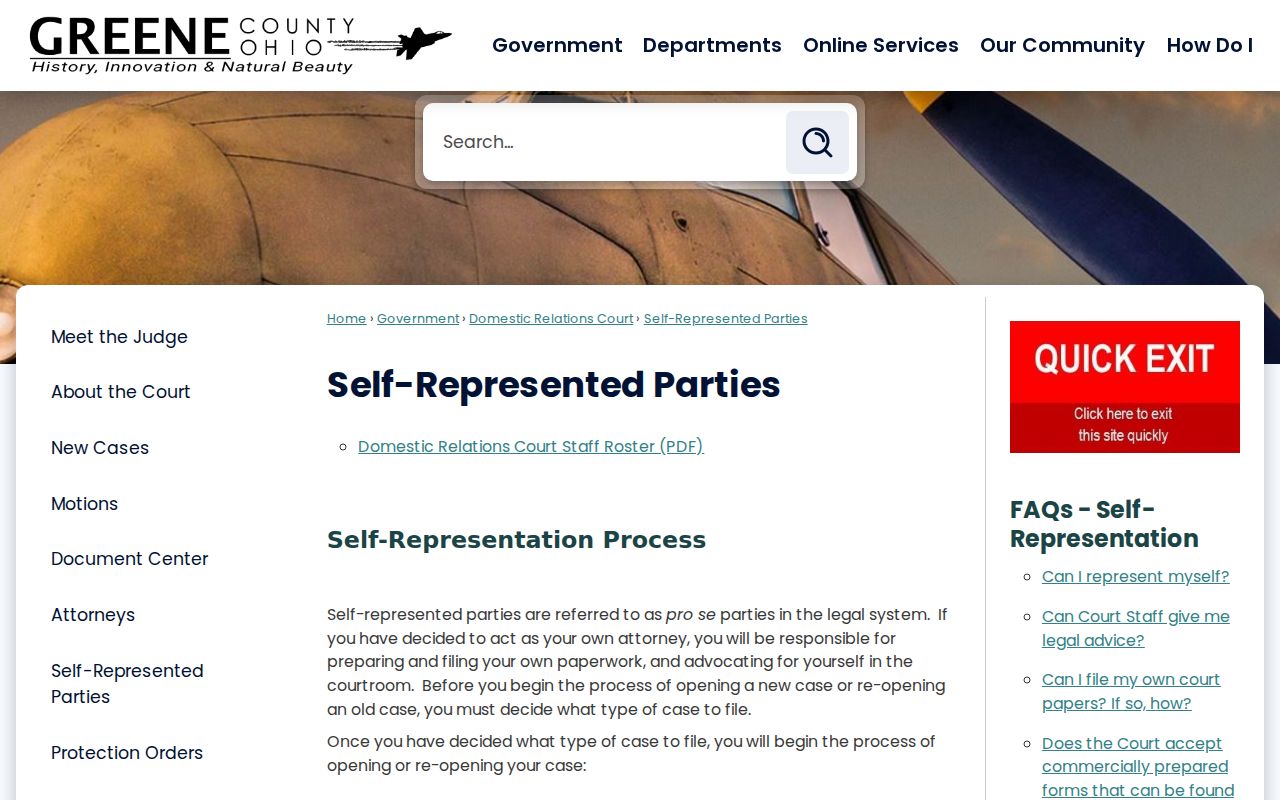
One reading habit matters above all: check the entry sequence and date before deciding what the current civil setting or filing status means.
Greene County Civil Service Entries
CourtView points Greene County users to the civil docket for service information, not postal tracking. A completed-service entry records case activity, not the filed return. Read it alongside later entries, and request the underlying document from the clerk when it matters.
Greene County Civil Search Fields
The search mode you pick in CourtView actually matters. A last-name search needs at least one character in the first-name field. A company name goes in Company Name, not the last-name box. Case-number mode should run on its own. The portal's CAPTCHA is part of the public process. The public information refreshes once every 24 hours on business days. So a very recent filing or order can call for a clerk check.
| Portal field | Use | Local format or limit |
|---|---|---|
| Name | Search a party | Use name mode only; a last-name search needs at least one first-name character. |
| Company Name | Search a business party | Use instead of Last Name. |
| Case Number | Search an exact Common Pleas identifier | YYYY TT SSSS; do not combine with name mode. |
| Fairborn date fields | Narrow a municipal civil search | Hearing date and file date are available on Fairborn's official form. |
Fairborn's Search Court Records page is the municipal alternative, with name, numeric case-number, hearing-date, and file-date options. Xenia does not publish every field, so do not assume its form matches Fairborn's.
Types of Civil Cases on the Docket
What counts as a civil case on the docket depends on the court and division. Common Pleas General Division takes general civil filings within its jurisdiction. Municipal courts keep their own civil and small-claims matters. Probate and Domestic Relations maintain distinct records too. A broad label like "civil" needs a division check. Otherwise the record request may not reach the right clerk.
- General civil matters maintained through Common Pleas General Division.
- Domestic Relations matters, including divorce, dissolution, legal separation, and related parenting or support proceedings.
- Municipal civil cases within Fairborn or Xenia territorial jurisdiction.
- Small-claims cases within the municipal courts' published small-claims channel.
- Probate proceedings such as estates, guardianships, trusts, adoptions, and name changes.
Public online access also varies by proceeding. Probate posts public dockets except for confidential proceedings, while Domestic Relations or juvenile-related material can carry separate restrictions.
Greene County Civil Court Limits
Dollar limits split the civil docket in Greene County. Fairborn and Xenia Municipal Court each cap civil jurisdiction at $15,000. Small claims are capped at $6,000. Anything above the municipal ceiling belongs in Common Pleas General Division. That division takes the civil matters beyond the lower courts' exclusive reach. One caution applies. The Common Pleas basic jurisdiction page still carries an older dollar description. Don't rely on it alone when choosing where a filing belongs.
Territory is a separate question from amount. Fairborn serves Fairborn, Beavercreek, Beavercreek Township, and Bath Township. Xenia covers Xenia, Bellbrook, Yellow Springs, and other listed communities. The court clerk can point you to the right docket for your dispute. That guidance never touches the merits of the case.
Settings and Hearings on Civil Dockets
A civil setting on a Greene County docket is a scheduled event, nothing more. It does not promise the case ends at that hearing. CourtView lists the next hearing event for covered Common Pleas cases. Its refresh runs on business days, so a portal date can trail a recent change.
Work from the best evidence in order. Read the latest docket entry first. Use a published daily docket if one exists, then call the assigned clerk or specialized office. A written court notice, when you have one, outranks them all. Treat an older notice or hearing entry as history. Wait until the newest docket activity confirms the setting still stands.
Greene County Domestic Relations Dockets
Domestic Relations confirms hearings its own way. The office mails notices, and the Assignment Office verifies any date you're unsure about. CourtView may show an event. But when a date truly matters, the office and the written notice carry more weight.
A continuance works differently than people expect. The motion must show good cause. Filing plus serving it moves nothing on its own. Only the court's grant changes the setting, so the later docket entry or notice controls.
Greene County Civil Docket Documents
Getting an ordinary copy from Common Pleas starts simply. Name the case and the item you want. Then visit, call, or send a narrow public-record request to the Legal Division. The Clerk policy asks no identity, no stated purpose, and no written request. The record itself, though, must be described clearly. Inspection is allowed during regular hours. Requests come in through the county web, email, mail, fax, or in person. Want copies by mail? Include a self-addressed stamped envelope.
Local rules route transcript requests through the Clerk under the case number. The court reporter then prepares the transcript at a court-determined cost. A transcript is not a docket printout. The official materials list no current per-page reporter rate, so expect to ask.
Greene County Civil Judgment Records
Three different records trip people up here. The docket is just the timeline. The filed document behind an entry might be the complaint, a motion, a signed order, or the judgment itself. A certified copy adds the clerk's certification for official use. Greene Legal Division does not put Common Pleas document images on CourtView. The docket entries themselves are still searchable.
A certificate of judgment is not the original judgment entry either. It's a clerk or court record used in judgment-lien and collection work. The signed judgment remains the court's written decision. Name the exact document when you ask the clerk for a copy.
Public Access to Civil Dockets
Ohio court-record rules and local restrictions govern access to Greene County civil dockets. The default is openness. A court can seal a file, or an Ohio-law exemption can apply, and otherwise the records stay public. When only part of a document is exempt, the Clerk policy directs the office to redact that portion and release the rest.
CourtView helps as an online channel. But its daily refresh, missing document images, pre-1982 gap, and access exclusions mean it never substitutes for the official certified record.
Key rules:
Ohio Sup.R. 44-47 defines court records, access, redaction, and restriction procedures.
R.C. 2303.12 requires Common Pleas docket and record keeping, including phased remote access with listed exceptions.
R.C. 2303.901 includes dockets and judgments as case documents while excluding personal identifiers and restricted material.
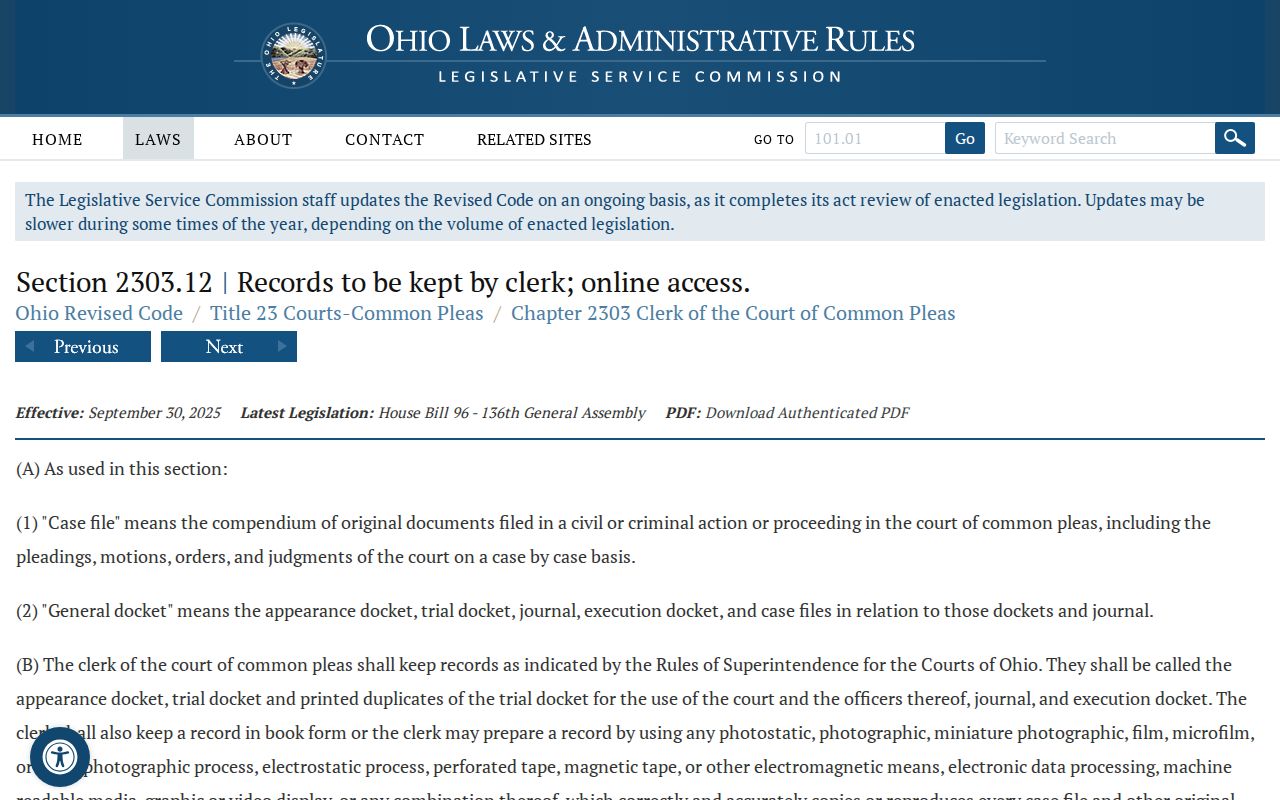
Ohio's Common Pleas online-record statute governs the assigned Greene County civil docket image. Its framework leaves domestic-relations, juvenile, and other restricted records under their own limits.
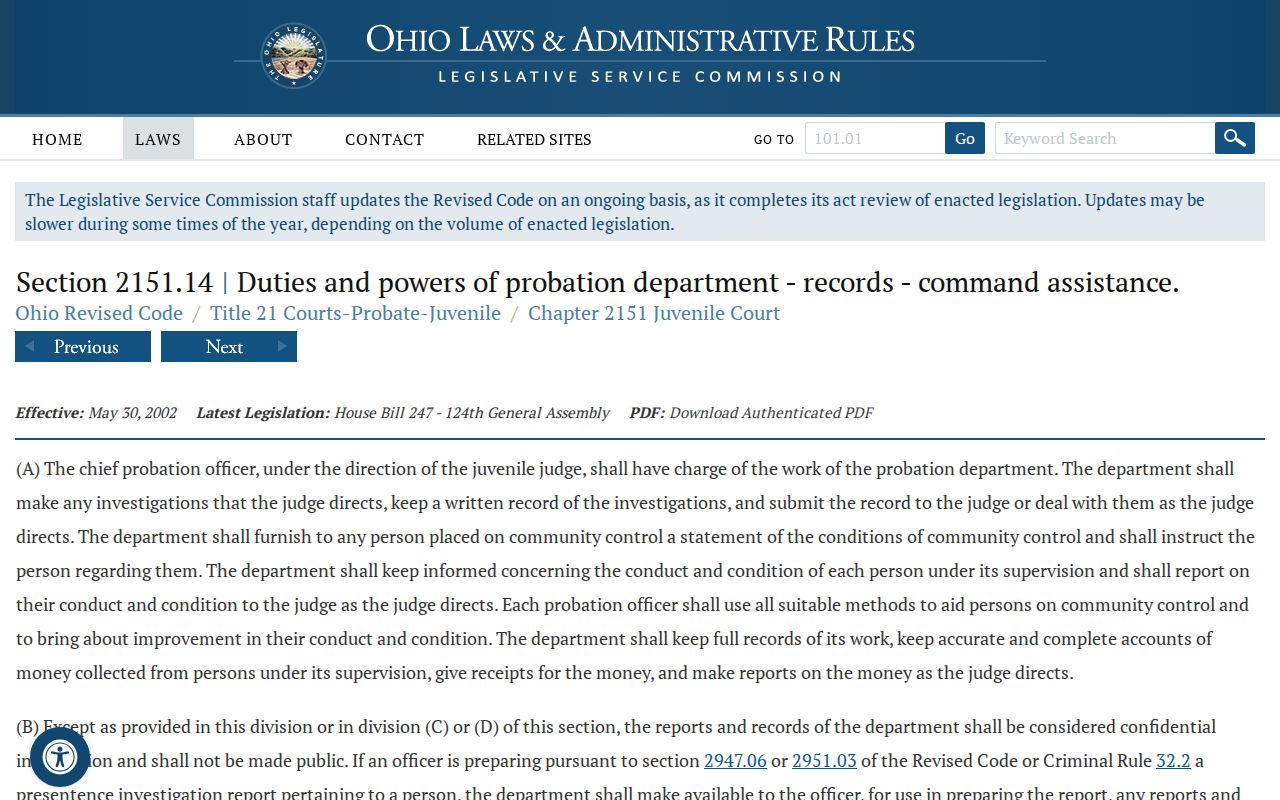
Ohio's juvenile-record confidentiality statute governs the second assigned access image. It shows why an electronic copy never turns a youth record into an open civil docket search.
No online result? The lawful next step is simple. Contact the clerk that holds the record and ask which access route applies.
Greene County Probate Civil Dockets
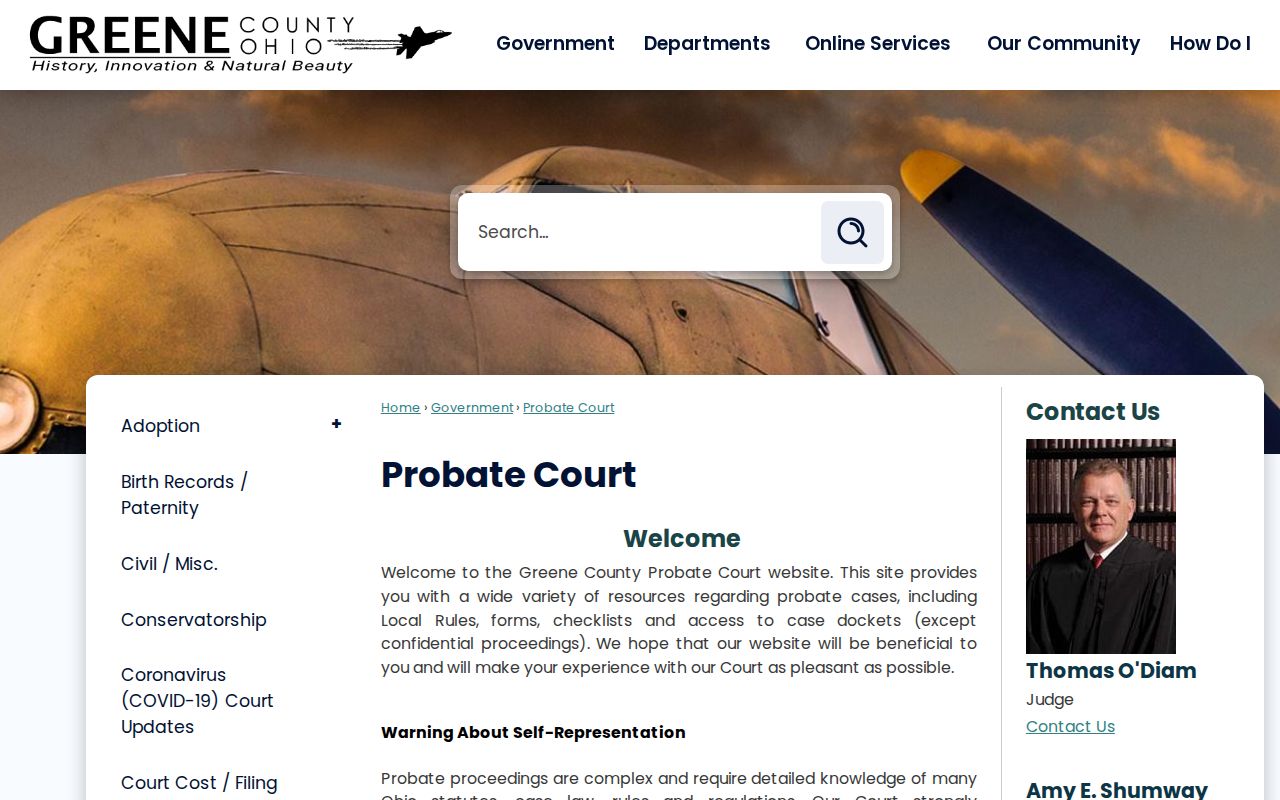
Probate Court runs its own Greene County docket channel, apart from the CourtView document system. It publishes case dockets except confidential proceedings. It names its courthouse records as the official source. Estate, guardianship, trust, adoption, name-change, and similar matters go to the Probate clerk, not the Common Pleas Legal Division.
The Greene County Probate Court page is the source for the assigned civil-docket image. Its published resources cover a public docket path, office contacts, and filing or payment material. Confidential proceedings stay outside ordinary public website access.
Need a document or certified record? Ask the Probate clerk for the specific item in the case. The docket locates activity, but the court's own file remains the authoritative source.